
Blooms Taxonomy Printable
Blooms Taxonomy Printable - Bloom's taxonomy chart features a colorful pyramid concerning the way students learn critical thinking and analysis, starting with knowledge and reaching evaluation. Benjamin bloom created a taxonomy of measurable verbs to help us describe and classify observable knowledge, skills, attitudes, behaviors and abilities. What do you think could have happened next.? Use the chart to help formulate effective learning. Examine and break information into parts by identifying motives or causes. Judgments about make inferences and find evidence to support generalizations. Bloom’s taxonomy can be useful for course design because the different levels can help you move students through the process of learning—from the most fundamental remembering and. Make a diorama to illustrate an important event. Examine and break present and information into parts by identifying motives or causes. Bloom's revised related verbs taxonomy: Can you write a brief outline.? Updated the taxonomy to reflect relevance to 21st century work. The revised taxonomy has altered categories and now includes verbs associated with each of the six aspects of cognition. Bloom’s taxonomy is a hierarchical model that outlines six categories of learning and application skills that progress from less to more complex. Bloom's taxonomy in 1956, benjamin bloom headed a group of educational psychologists who developed a classification of levels of intellectual behavior important in learning. Bloom’s taxonomy can be useful for course design because the different levels can help you move students through the process of learning—from the most fundamental remembering and. Judgments about make inferences and find evidence to support generalizations. What do you think could have happened next.? The graph demonstrates the six aspects of learning, remembering, Bloom's taxonomy chart features a colorful pyramid concerning the way students learn critical thinking and analysis, starting with knowledge and reaching evaluation. Benjamin bloom and colleagues (1956) created the original taxonomy of the cognitive domain for categorizing level of abstraction of questions that commonly occur in educational settings. Can you write a brief outline.? The two graphics show the revised and original taxonomy. Bloom’s taxonomy overview of bloom’s taxonomy: The theory is based upon the. Which is true or false.? Judgments about make inferences and find evidence to support generalizations. The revised taxonomy has altered categories and now includes verbs associated with each of the six aspects of cognition. Use the chart to help formulate effective learning. Prepare a flow chart to illustrate the sequence of events. Updated the taxonomy to reflect relevance to 21st century work. Prepare a flow chart to illustrate the sequence of events. The theory is based upon the. Solve problems to new situations by applying acquired knowledge, facts, techniques and rules in a different way. Use the chart to help formulate effective learning. Benjamin bloom created a taxonomy of measurable verbs to help us describe and classify observable knowledge, skills, attitudes, behaviors and abilities. Defend opinions anci anc4 lustitv a course of action about in formation. Benjamin bloom and colleagues (1956) created the original taxonomy of the cognitive domain for categorizing level of abstraction of questions that commonly occur in educational settings. Bloom's. Bloom’s taxonomy is a hierarchical model that outlines six categories of learning and application skills that progress from less to more complex. Can you write a brief outline.? Bloom’s taxonomy overview of bloom’s taxonomy: Prepare a flow chart to illustrate the sequence of events. Can you write in your own words.? Make a diorama to illustrate an important event. The theory is based upon the. Which is true or false.? Examine and break present and information into parts by identifying motives or causes. The two graphics show the revised and original taxonomy. The two graphics show the revised and original taxonomy. The theory is based upon the. Benjamin bloom and colleagues (1956) created the original taxonomy of the cognitive domain for categorizing level of abstraction of questions that commonly occur in educational settings. Construct a model to demonstrate how it will work. Bloom’s taxonomy is a hierarchical model that outlines six categories. Defend opinions anci anc4 lustitv a course of action about in formation. Bloom’s taxonomy can be useful for course design because the different levels can help you move students through the process of learning—from the most fundamental remembering and. The chart below arranges bloom's levels of cognitive activity from simple to complex and lists verbs that correspond to each level.. Note the change from nouns to verbs associated with each level. Can you write in your own words.? The chart below arranges bloom's levels of cognitive activity from simple to complex and lists verbs that correspond to each level. Can you write a brief outline.? Bloom's taxonomy in 1956, benjamin bloom headed a group of educational psychologists who developed a. Can you write in your own words.? Updated the taxonomy to reflect relevance to 21st century work. Bloom’s taxonomy is a hierarchical model that outlines six categories of learning and application skills that progress from less to more complex. Benjamin bloom and colleagues (1956) created the original taxonomy of the cognitive domain for categorizing level of abstraction of questions that. Examine and break present and information into parts by identifying motives or causes. Make a diorama to illustrate an important event. • bloom argued that our brain learns things stages of organizing information.in • the table shown will help you better understand how you. Use the chart to help formulate effective learning. Can you write a brief outline.? In this printable, you get: Bloom’s taxonomy can be useful for course design because the different levels can help you move students through the process of learning—from the most fundamental remembering and. Bloom's revised related verbs taxonomy: Defend opinions anci anc4 lustitv a course of action about in formation. Examine and break information into parts by identifying motives or causes. Note the change from nouns to verbs associated with each level. Solve problems to new situations by applying acquired knowledge, facts, techniques and rules in a different way. The two graphics show the revised and original taxonomy. Bloom's taxonomy chart features a colorful pyramid concerning the way students learn critical thinking and analysis, starting with knowledge and reaching evaluation. Which is true or false.? Updated the taxonomy to reflect relevance to 21st century work.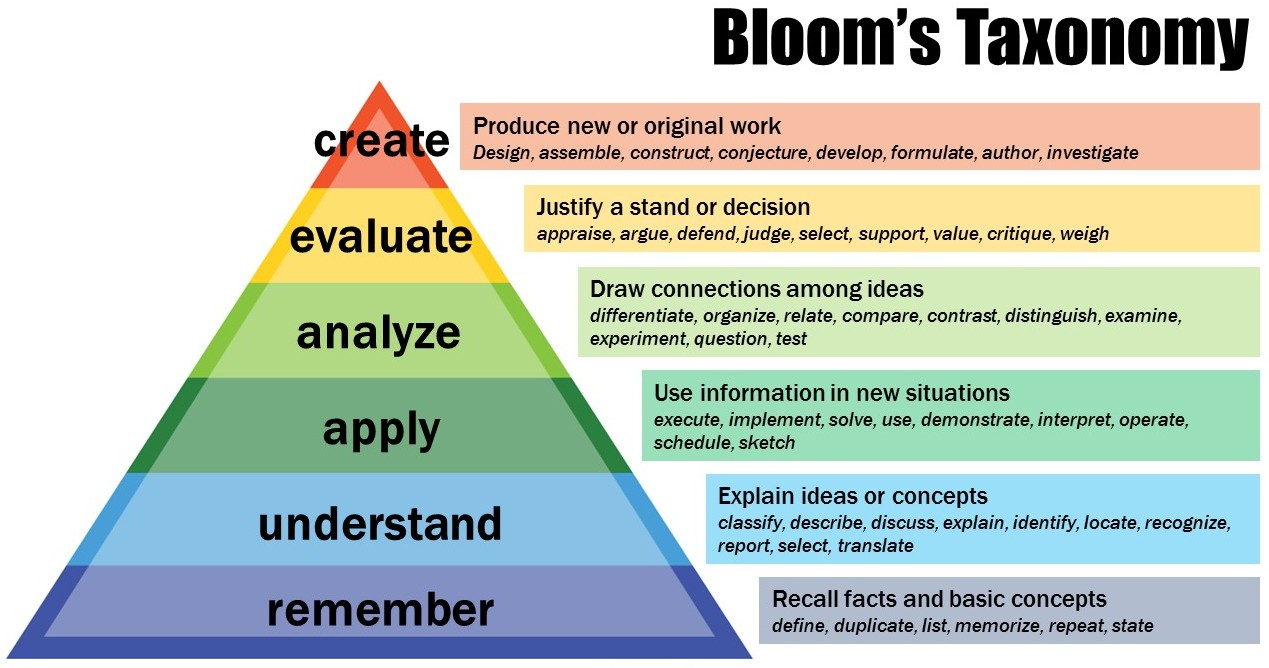
Bloom’s Taxonomy Center for Teaching Vanderbilt University
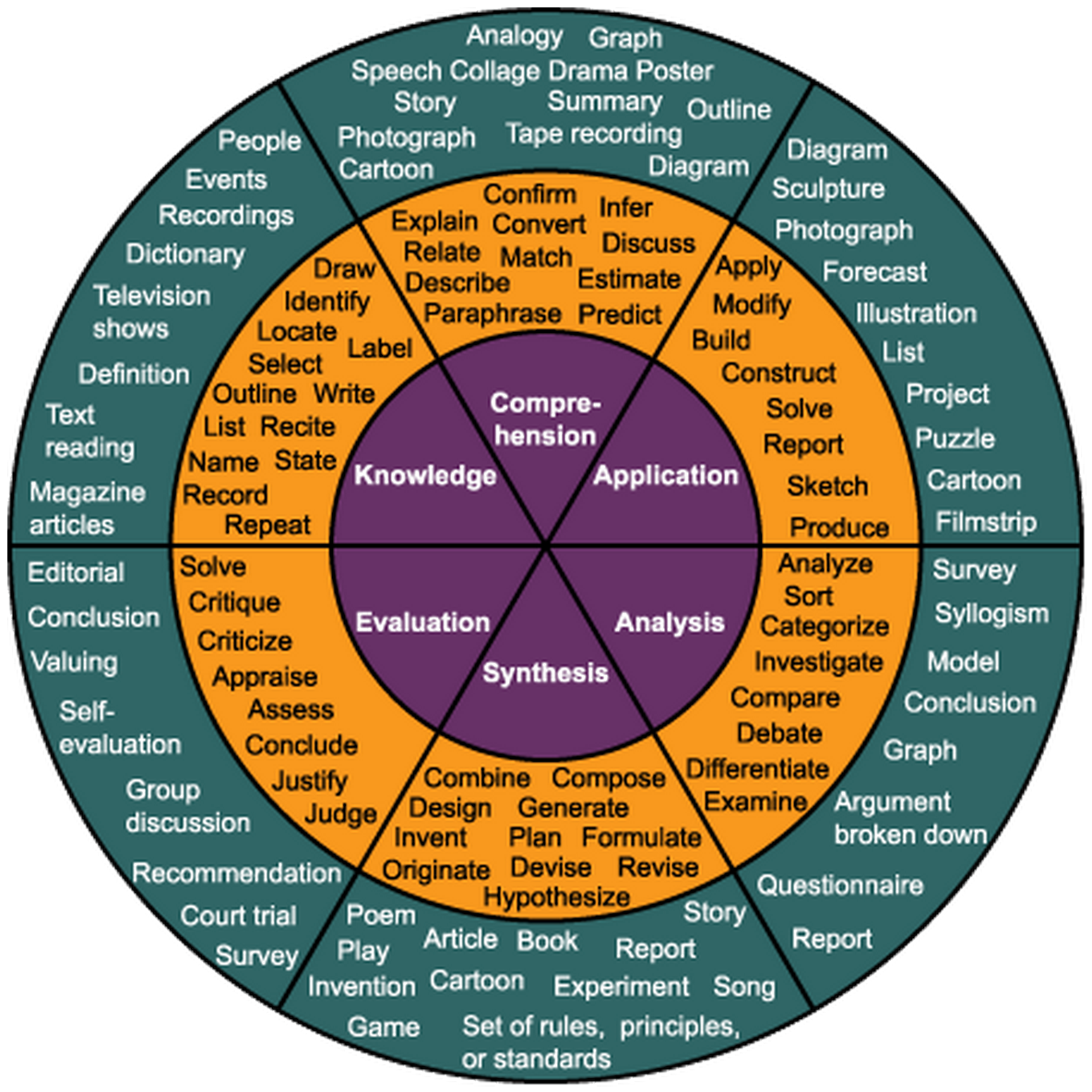
8 Wonderful Blooms Taxonomy Posters for Teachers Educational

Bloom's Taxonomy CPAHS Library
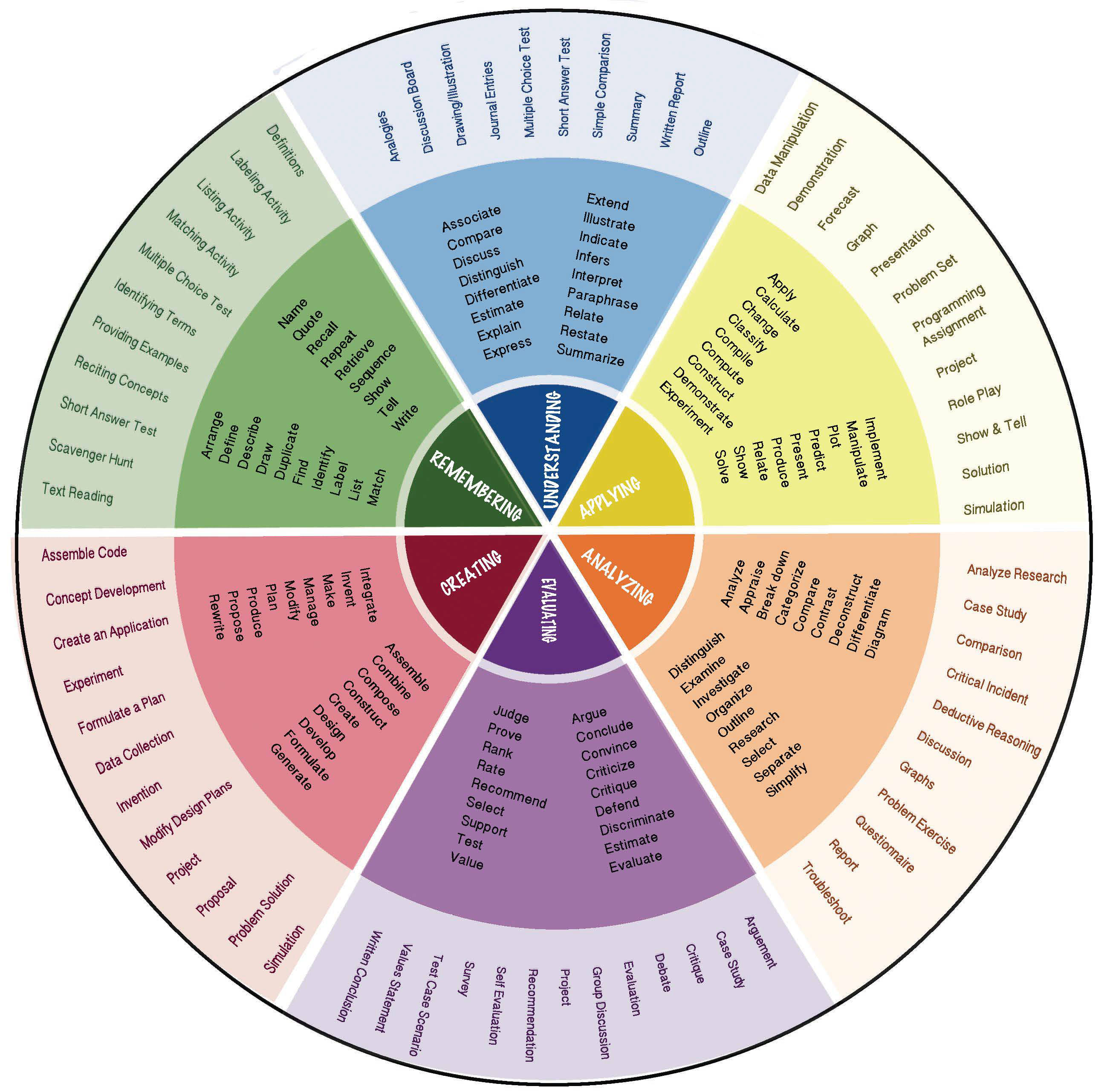
Printable Bloom's Taxonomy

Printable Bloom's Taxonomy

Free Printable Bloom S Taxonomy Printable Word Searches
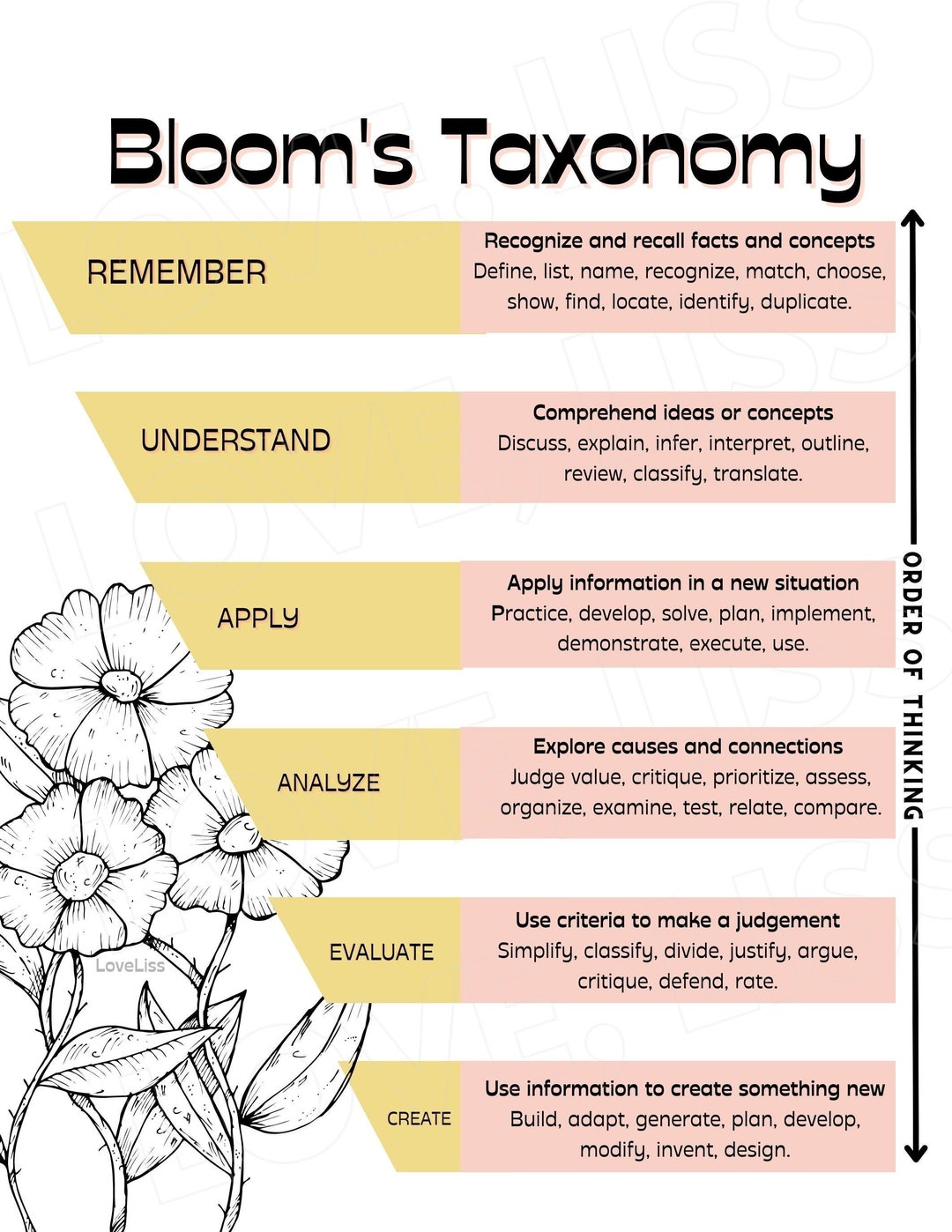
Bloom's Taxonomy Printable Reference Etsy

Bloom's Taxonomy With Sample Questions

Bloom's Taxonomy Printable Posters Editable in Canva Etsy Canada
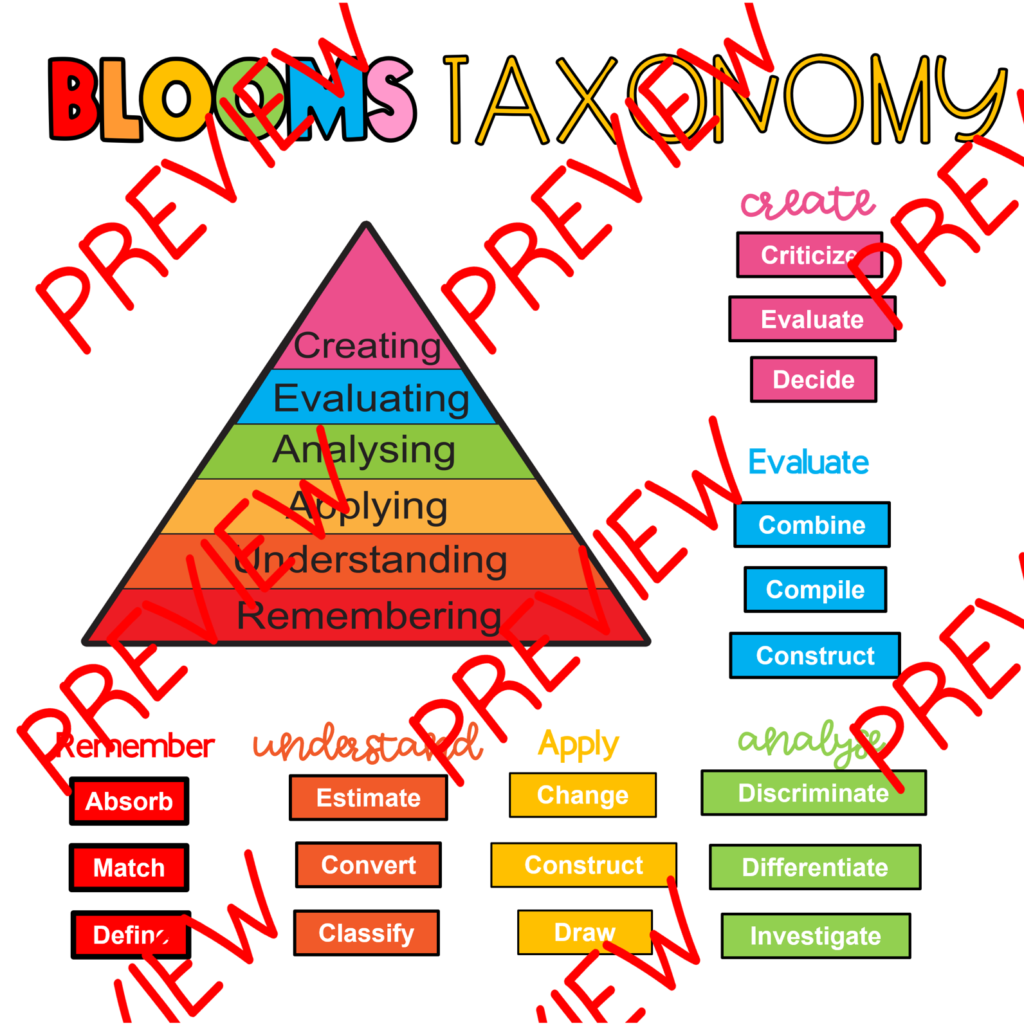
Blooms Taxonomy posters • Teacha!
Benjamin Bloom Created A Taxonomy Of Measurable Verbs To Help Us Describe And Classify Observable Knowledge, Skills, Attitudes, Behaviors And Abilities.
The Old And New Bloom's Taxonomy Pyramid, A Chart That Explains Different Levels Of Bloom's Taxonomy, And A Practice Worksheet.
Bloom’s Taxonomy Is A Hierarchical Model That Outlines Six Categories Of Learning And Application Skills That Progress From Less To More Complex.
The Revised Taxonomy Has Altered Categories And Now Includes Verbs Associated With Each Of The Six Aspects Of Cognition.
Related Post: